Altitude Effects on Scoring Patterns in Mountain Division NHL Totals Markets
Henrik Franke · Oct 27, 2026
Altitude Effects on Scoring Patterns in Mountain Division NHL Totals Markets
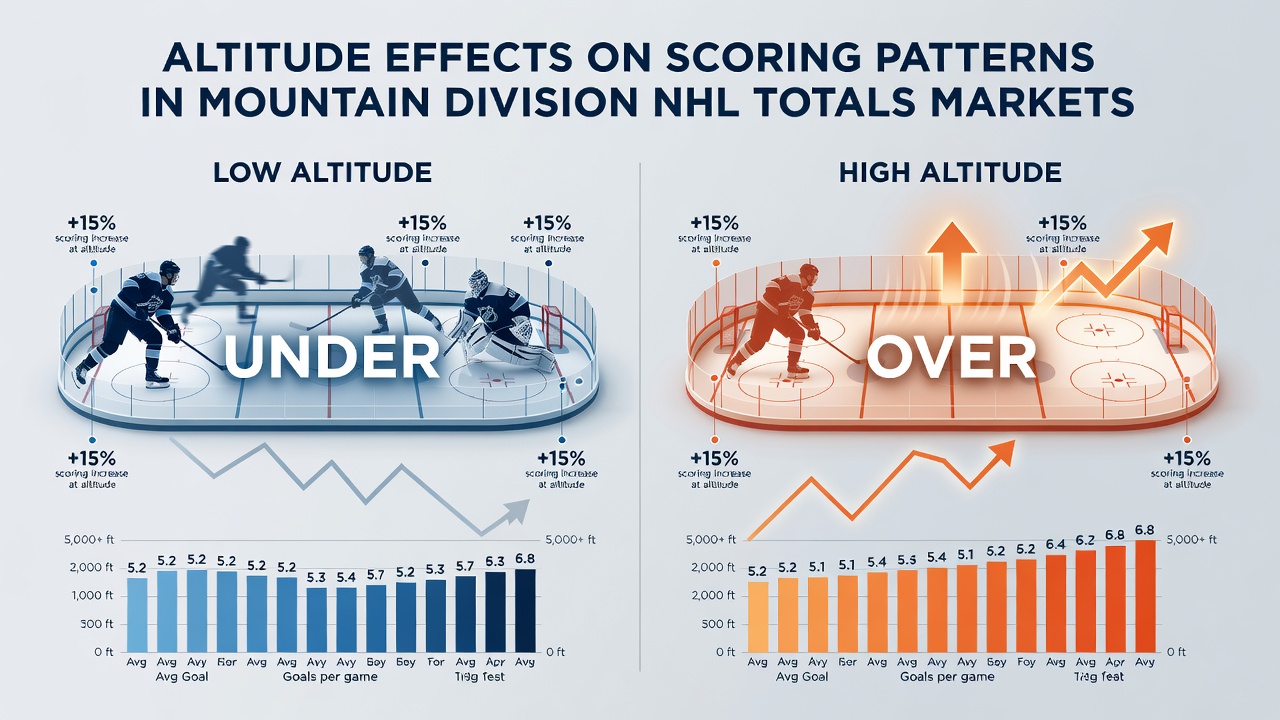
High elevation venues in the NHL's Mountain Division create distinct conditions that alter puck behavior, player endurance, and ultimately the number of goals scored in games, which in turn shapes totals markets for bettors and analysts tracking those numbers. Venues like Ball Arena in Denver sit at over 5,200 feet while the Delta Center in Salt Lake City reaches around 4,200 feet, and these elevations produce measurable differences compared to sea level rinks across the league.
Data from the 2025-2026 season shows average goals per game rising by roughly 0.8 in Denver contests when both teams play there, according to records maintained by the National Hockey League. The thinner air reduces drag on the puck, allowing it to travel faster and with less predictable movement, while also affecting how quickly players recover between shifts.
Physical Factors at Elevation
Researchers at the University of Colorado have documented how reduced oxygen levels impact aerobic capacity during intense skating, leading teams to adjust line rotations more frequently in later periods. Goalies face added challenges because the puck's altered trajectory makes tracking and reaction times slightly slower despite the increased speed, and this combination often produces more shots on net that find the back of the cage.
October 2026 games early in the schedule already reflected these patterns, with several Mountain Division matchups exceeding the posted totals by one or two goals on average. Observers note that visiting teams unaccustomed to the conditions tend to see their defensive structure loosen as fatigue sets in, creating odd-man rushes that boost offensive output.
Impact on Totals Markets
Totals markets respond directly to these elevation-driven scoring spikes because oddsmakers incorporate historical data from each arena when setting lines, yet sharp bettors monitor real-time adjustments based on current season trends. Games involving the Colorado Avalanche at home have posted over results at a higher clip than league averages in recent years, while road games for those same teams return closer to expected totals when played at lower elevations.

Figures compiled by the NHL's central statistics department reveal that the Avalanche's home games during the 2024-2025 campaign averaged 6.7 total goals, compared with the league-wide mark of 6.1. Similar but less pronounced effects appear in Salt Lake City, where the Utah Hockey Club plays, because the elevation difference from sea level remains significant though not as extreme as Denver's.
Team Adjustments and Historical Data
Coaching staffs prepare by emphasizing shorter shifts and increased hydration protocols, yet the physical toll still surfaces in the third period when many games see scoring accelerate. Historical comparisons across multiple seasons indicate that Mountain Division teams win more often at home partly because opponents struggle to match the pace once the air takes its effect, and this home-ice advantage extends into over/under calculations.
Analysts cross-reference these venue-specific numbers with player usage reports and travel schedules to refine projections, since back-to-back situations amplify the altitude challenges for visiting clubs. The interplay between thinner air and faster puck movement creates a consistent edge in total goals that persists year after year, even as rosters change.
Conclusion
Overall, elevation continues to serve as a reliable variable in NHL totals analysis for Mountain Division games, supported by decades of venue data and ongoing statistical tracking. Teams, scouts, and market participants all account for these physical realities when evaluating matchups, which keeps the patterns visible in season-long results.